Chalcopyrite
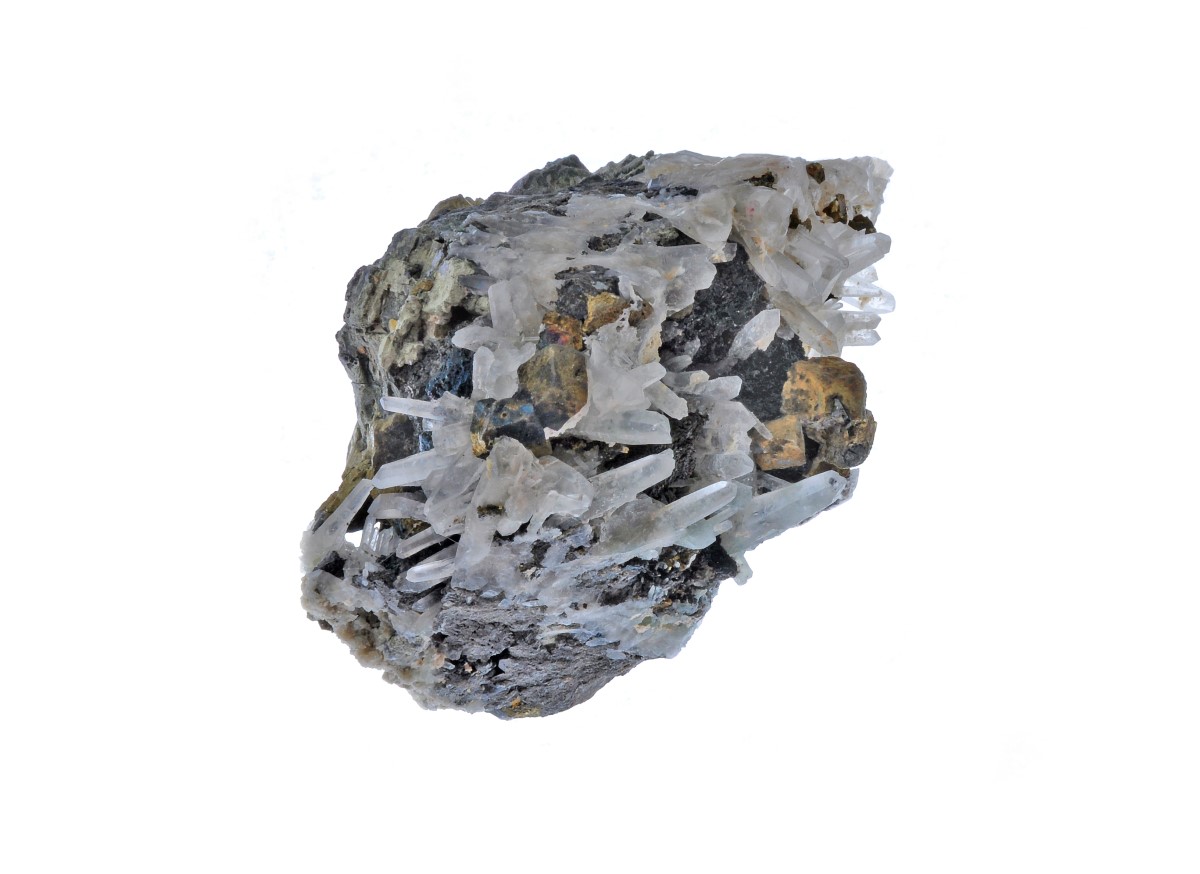
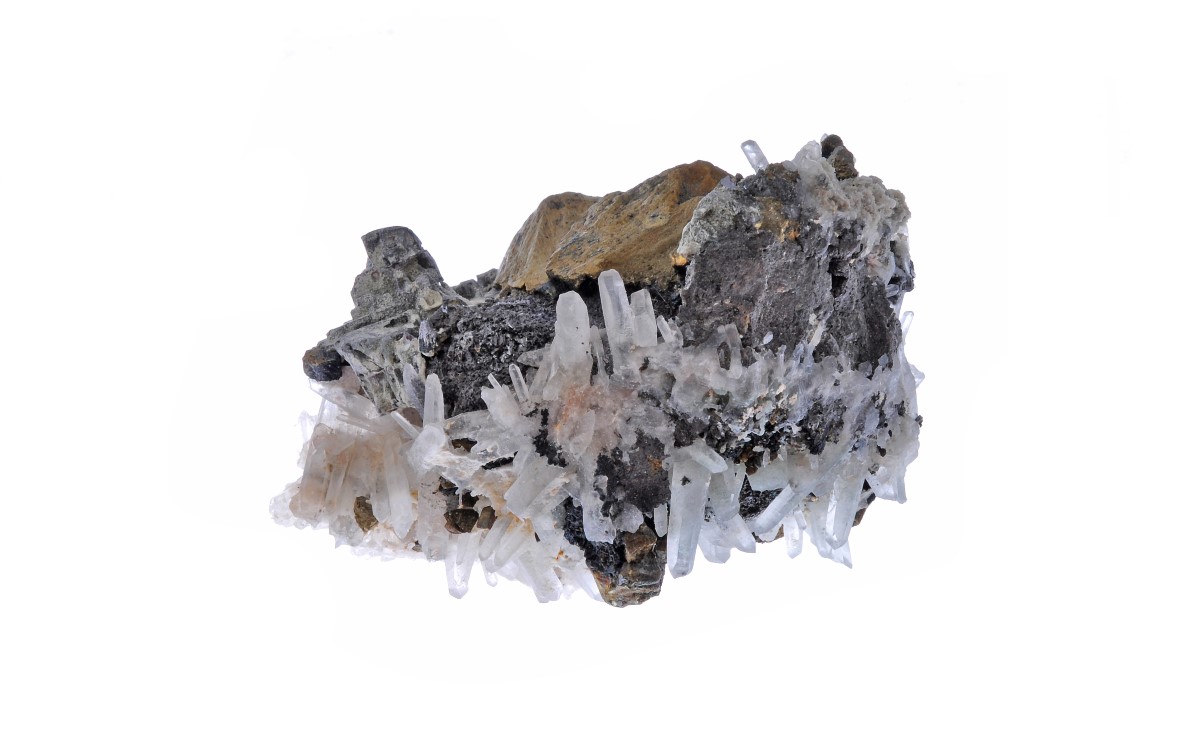
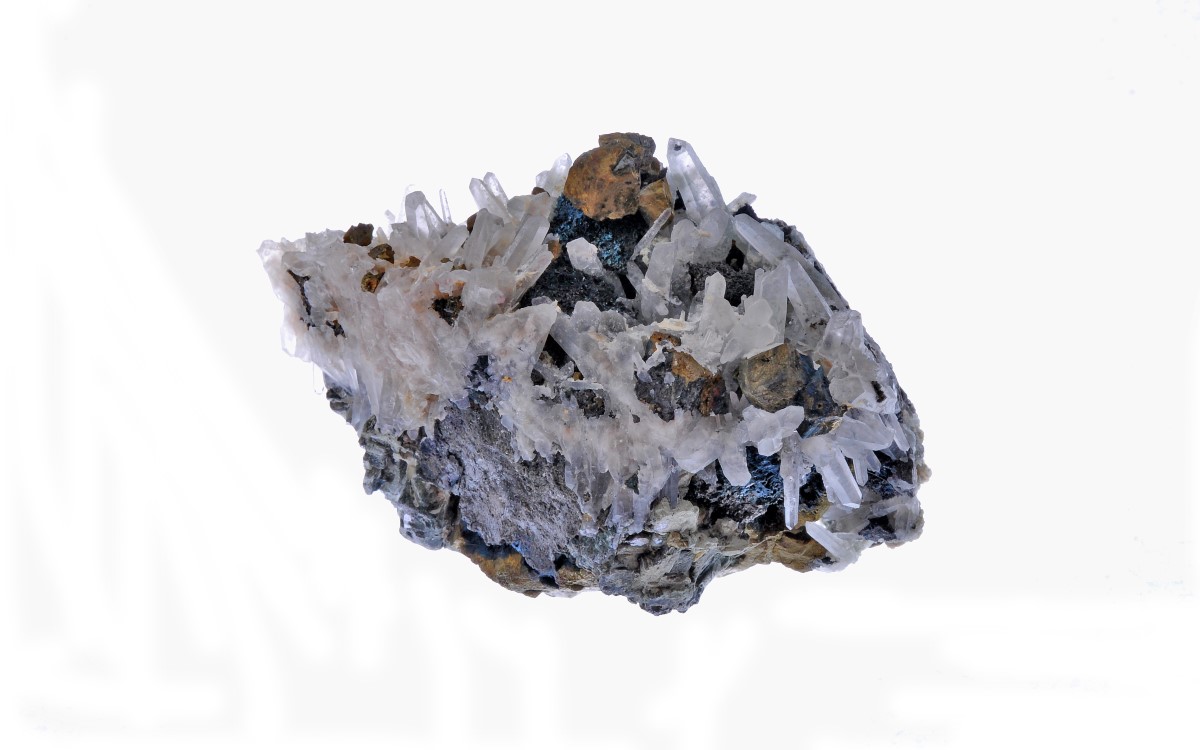
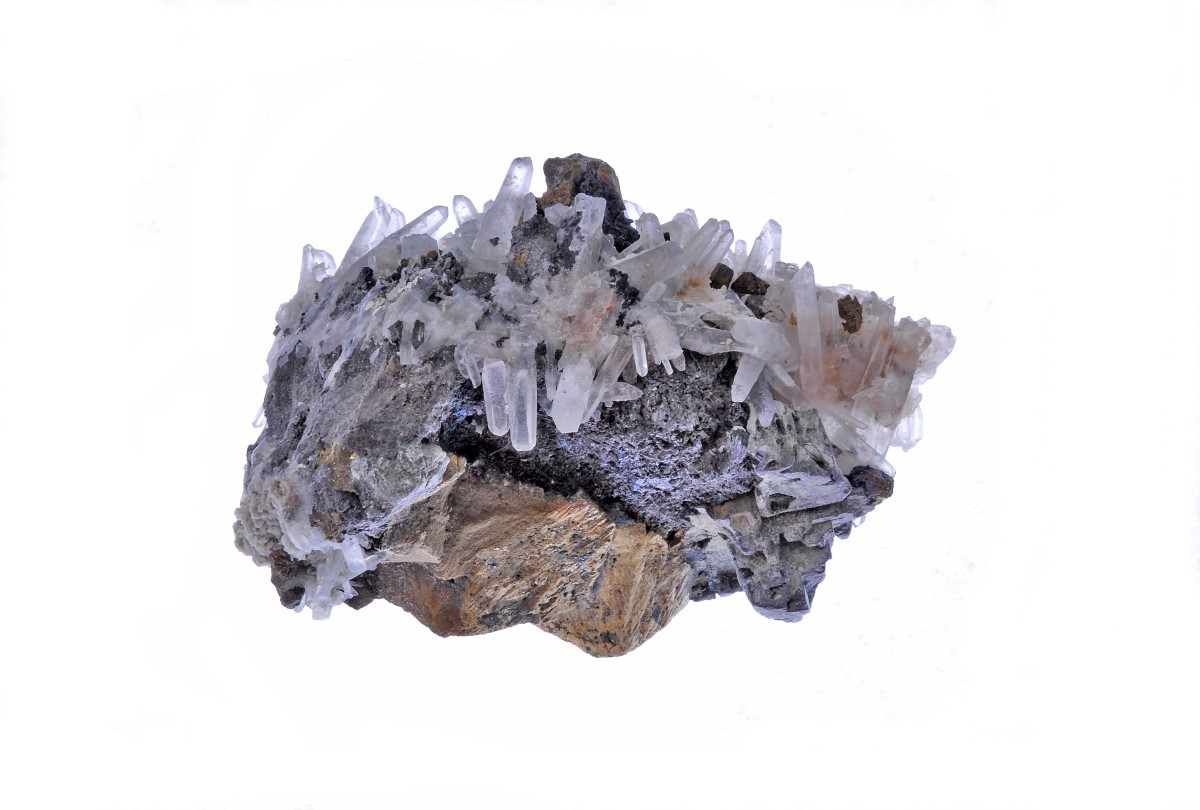
Of the other minerals, chalcopyrite is distinguished primarily by its golden saturated color and strong metallic shine. In addition, an arc-like effect also occurs frequently on the surface of the crystals. All this is the reason why chalcopyrite crystals are real favorites of minerals collectors.
Chalcopyrite is sometimes mixed with pyrite, although from the last mineral, chalcopyrite has a more intense color, sometimes with a barely visible greenish hue. The hardness of the mineral is also lower than that of the pyrite and is easily scratched with a needle. The most reliable determinant of the mineral is its very characteristic appearance, inherent in its crystals. And another characteristic is only characteristic of the chalcopyrite - in the flame of the soldering iron, this mineral cracks, then starts to burn, releasing sulfuric gas and alloying in a magnetic stripe.
Chalcopyrite crystals are generally curved or complex shielded. And only the very small crystals have the correct shape of tetrahedron or pyramid. Large crystals are often paired and this is clearly visible at the incoming corners and stitches that ruin the direction of the shade. When the chalcopyrite comes to the surface of the earth, it quickly loses its shape, it breaks down and gives rise to a new mineral - pissanite, halanthite, malachite, atacamite, azurite.
Since the times of Agrigole, the name "copper pyrite" has been attached to the mineral. The modern name "chalcopyrite" was proposed in 1725 by the scientist - miner miner JF Henkel. In translation from Greek it means "copper pyrite" and talks about the chemical composition of the mineral. The mineral is also called copper, yellow ore.
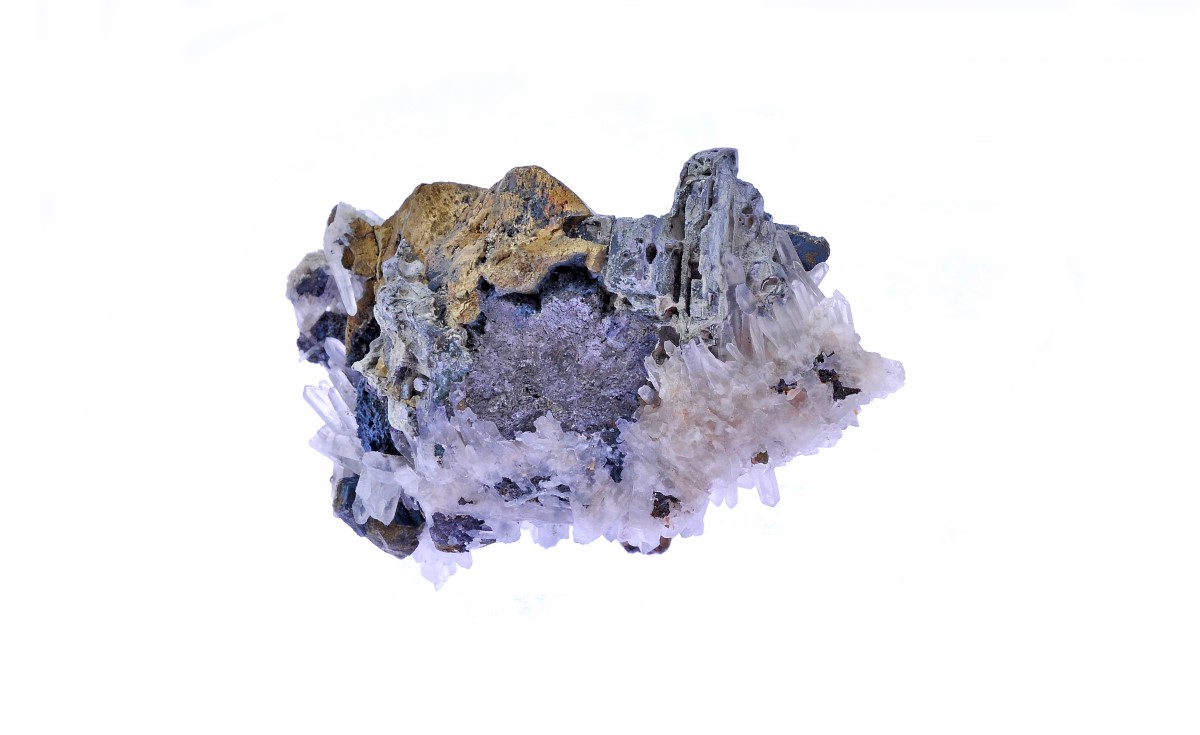
In nature, chalcopyrite is usually found along with white calcite or a colorless crystal. On their background, chalcopyrite crystals look particularly beautiful and festive.
 dsc_0478ap6.jpg